About Me
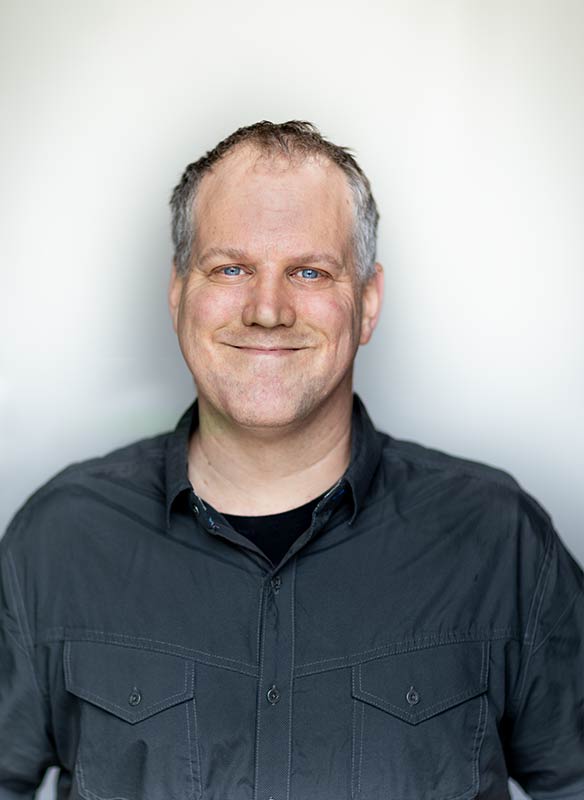
Hi I'm Mike Walters. Technology leader. Team builder. 25+ years making people and systems grow.
I Measure Success by Who’s Growing Around Me.
There’s a question I’ve carried with me for most of my career: What does it actually mean to lead well?
Not manage well, not deliver well, though both matter. But lead well, in the truest sense. I’ve landed on an answer that surprises some people when I say it out loud: the best thing a leader can do is make themselves increasingly unnecessary.
Not because the work doesn’t need doing. It always does. But because if the people around you can only succeed when you’re in the room, you haven’t built anything that lasts. You’ve built a dependency.
I’ve spent 25+ years in technology, from writing embedded systems code at the architecture level, to directing engineering organizations of 35+ people, to running Tier-1 global services at Amazon. And the accomplishment I’m most proud of, across all of it, isn’t a system I designed or a product I shipped. It’s the number of people I’ve watched grow into something bigger than what they thought they were capable of.
That’s the thing that stays with me.
The Philosophy Underneath Everything
I believe most hard problems in technology are actually people problems in disguise.
The architecture that cannot scale is usually the result of a communication breakdown between teams that started too late. The product that does not land with customers is usually the result of an engineering organization that was not close enough to the people using it. The team that regularly misses deadlines is usually dealing with a clarity problem, not a capability problem.
This does not mean the technical work is not hard or does not matter. It absolutely does. But I have found that when you get the people dynamics right, when people feel genuinely trusted, when they understand the reason behind what they are building, and when they have room to be wrong and learn quickly, the technical problems become much more solvable.
So I focus there first. Not exclusively, but first.
This shows up in how I structure teams, how I run meetings, how I give feedback, and how I think about roadmaps. It shows up in the 1:1s where I am not checking on tasks but asking what someone wants to improve. It shows up when I resist the urge to solve a problem myself and instead ask the person in front of me what they would do, because the answer they arrive at on their own is worth ten times the answer I hand them.
One of my former HR partners framed it in a way that has since stuck with me: providing prompt, clear, and meaningful feedback is how you show people you believe in their ability to succeed. Not performance management. Not accountability theater. Genuine belief, expressed consistently.
That framing changed how I think about hard conversations. They aren’t obstacles to a good culture. They’re part of building one.
What I’ve Learned About Finding the Real Problem
One of the hardest skills I have developed over the years, and one I consider central to how I operate, is the discipline of not solving the problem until I am confident it is right problem to solve.
Early in my career this was harder. There’s a pull toward the stated objective, the approved scope, the original brief. But some of my most meaningful work has come from moments where I paused and asked: wait, what are we actually trying to accomplish here?
This isn’t contrarianism. It’s curiosity. And it’s a habit I try to build in every team I lead.
The eBPF research project I led at Contrast Security is a small example of this. We started with one hypothesis and discovered, pretty quickly, that it wasn’t going to pan out. Rather than treating that as failure, we treated it as information. And it led us somewhere far more valuable than where we started. Onboarding time for clients dropped by 85%. A major enterprise account went from 10% license utilization to nearly full adoption. And the two engineers who ran the research came out the other side with capabilities they didn’t have going in.
That last part matters as much to me as the business outcome. Maybe more.
The willingness to say “this isn’t working, what else is here?” Without panic, without blame, and with genuine curiosity is something I try to model every time I get the chance. If a leader cannot do that, the team will not either.
On Building Cultures That Outlast You
My VP at Contrast Security, who I worked with for five years, made an obsevation about me that I reflect on often. That I know how to replace myself in a way that few understand: by helping those on my team grow into their own expanded roles.
It remains one of the most meaningful professional compliments I have received.
The teams I am most proud of are the ones that continued to thrive after I was no longer leading them day to day. The managers I coached who grew into leaders of their own organizations. The engineers who challenged my ideas constructively and confidently because we created a culture where healthy disagreement was not only welcomed but expected.
An architect I worked with at Contrast for nearly four years, described our relationship this way: we rarely shared the same point of view, and that was the best part. I love that. Disagreement, when it’s rooted in shared purpose and principle, isn’t friction. It’s the work.
I’ve tried to build teams where the goal isn’t consensus, it’s clarity. Where people can hold different views, interrogate them rigorously, and move forward together on something better than any one person would have reached alone.
The Throughline Across 25 Years
I’ve worked in aerospace, healthcare, HVAC, e-commerce, cybersecurity, and logistics. I’ve been a solo architect, a senior consultant, a development manager, a director leading 35+ people, and now a manager at Amazon stewarding global-scale systems.
The industries changed. The technologies changed. The org structures, the business models, the team sizes…all of it shifted.
What didn’t change was this: the work only matters if the people doing it are growing. And the systems only last if the humans behind them understand them deeply enough to own them. Not just maintain them, but own them.
That belief has been my compass through all of it.
If you’re reading this because you’re curious about the projects I’ve worked on, the architecture decisions, the technical bets, the product pivots.. I’m happy to go deep on any of it. But I hope what comes through here first is something more fundamental: a way of thinking about what technology leadership is actually for — and that’s people.